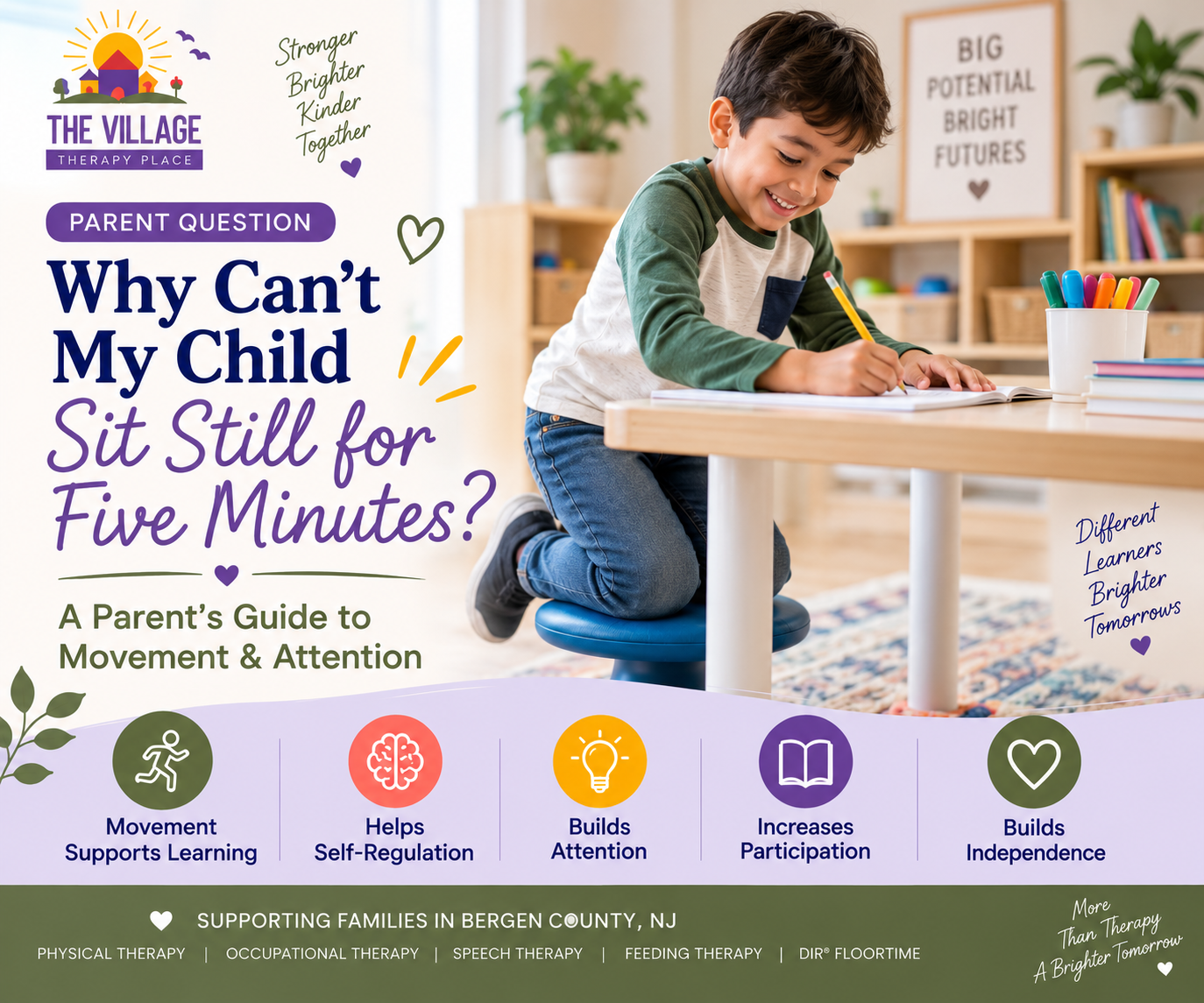
Why Can’t My Child Sit Still for Five Minutes?
“He literally cannot sit still.”
“She’s upside down in the chair during homework.”
“He gets up from the dinner table every two minutes.”
Sound familiar?
With school back in session, many parents suddenly notice just how much sitting we expect from children.
Sit for morning meeting. Sit at a desk. Sit for lunch. Sit for homework. Sit for dinner.
That’s a lot of sitting for a growing body!
And sometimes, when a child is constantly wiggling, rocking, changing positions, or getting out of their seat, our first thought is:
“Why can’t you just sit still?”
But there may be a better question:
“What is this movement doing for my child?”
Sometimes Movement Helps Children Pay Attention
Children process information from their bodies and surroundings all day long.
For some children, movement actually helps their bodies feel organized and ready to participate.
That child bouncing a foot under the table, kneeling instead of sitting, or getting up repeatedly may not necessarily be trying to avoid the activity.
Their body may simply be saying:
“I need to move.”
And interestingly, expecting less stillness can sometimes lead to better attention.
Try Giving Movement a Job
Rather than constantly reminding your child to “sit still,” try building movement into the routine.
Before homework, try:
Animal walks. Bear walk or crab walk down the hallway.
Heavy work. Carry books, push a laundry basket, or help move something appropriate for their size.
A quick movement break. Ten jumps, a dance break, or a lap around the house.
Different working positions. Homework doesn't always have to happen sitting perfectly upright at a desk. Some children work well standing, kneeling, or even lying on their stomachs for short periods.
Most importantly, watch your child.
Does a little movement help them return calmer and more focused?
That's useful information.
The Goal Isn't a Perfectly Still Child
Being able to participate is important.
Being perfectly still isn't.
Sometimes children need help learning how to give their bodies the movement they need while still participating in what's happening around them.
Take-Home Message
The next time you find yourself saying, “Please sit still!”—get curious first.
Your child may not need another reminder.
They may need a chance to move.
And sometimes that five-minute movement break is exactly what helps them come back ready for the next ten.